 orbitrace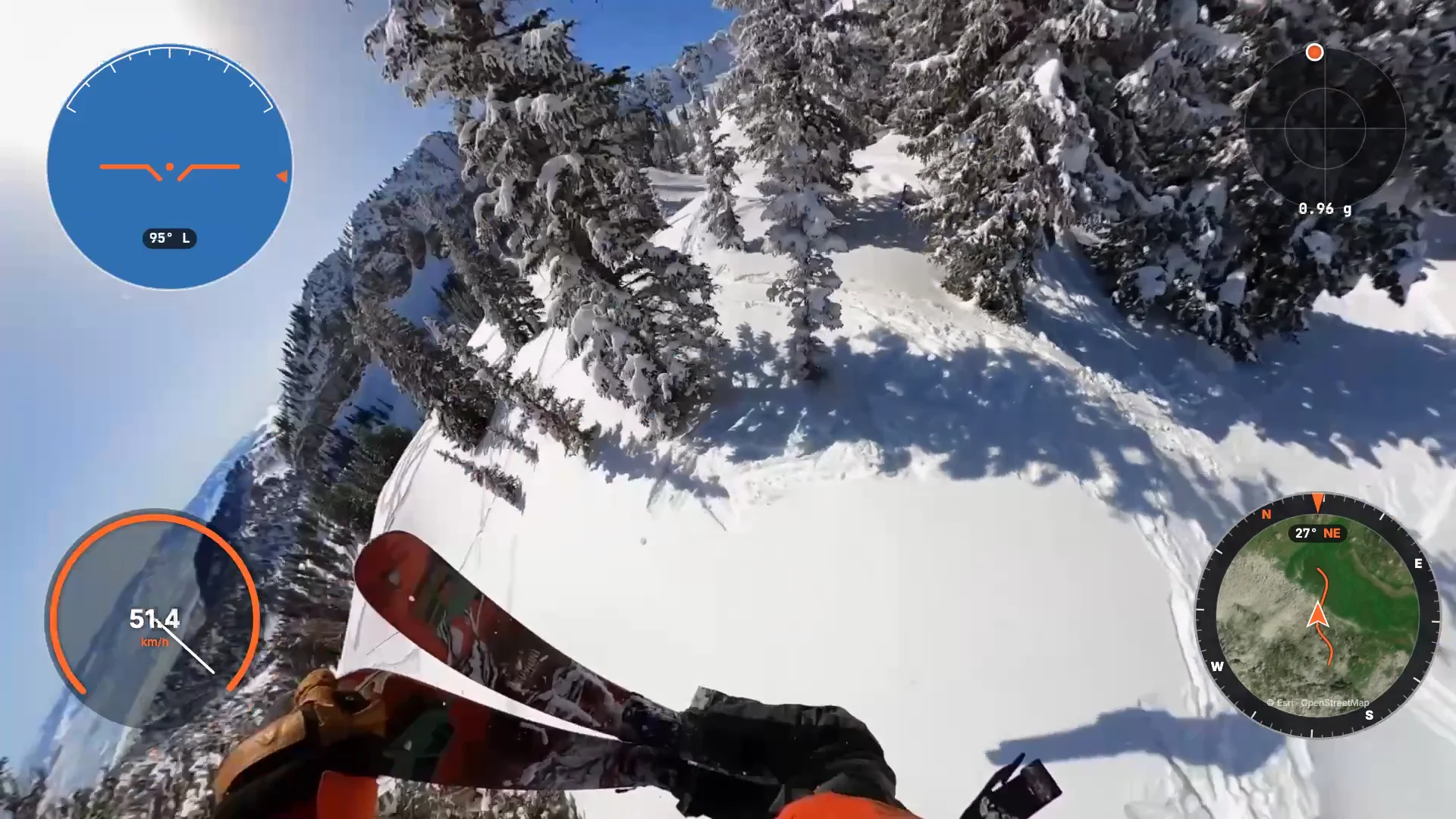
On the piste
Speeds vary enormously with the slope, the snow, the crowd and the skier. As rough orders of magnitude:
- a cautious recreational skier on a gentle slope rides at a few tens of km/h;
- a good skier on an open, groomed red run easily passes 50 km/h;
- beyond 80 to 100 km/h, you are among very committed skiers, on an empty slope, with the right gear.
Speed is felt very differently from what it is: on a wide piste, 60 km/h can feel calm; in a narrow forest track, 35 km/h feels fast. Many resorts mark slow zones on busy sections: speed there is a matter of others’ safety.
In competition
- Slalom and giant slalom: speed is limited by the gates; precision counts more than top speed.
- World Cup downhill: the fastest sections exceed 150 km/h; Johan Clarey was timed at 161.9 km/h at Wengen in 2013, one of the highest speeds recorded in a World Cup race.
- Speed skiing (the “flying kilometre”): a straight line on a dedicated, very steep track. Ivan Origone set the world record at 254.958 km/h at Vars in 2016; Valentina Greggio holds the women’s record at 247.083 km/h, set the same year at the same venue.
Measuring your own speed
A GPS camera or watch gives you your real speed — and your real top speed — rather than an impression.
- GoPro with GPS (HERO5 to HERO11, HERO13, MAX): the speed is in the MP4.
- Insta360 X3, X4, X5: with GPS from your phone (Insta360 app open) or a GPS remote.
- A watch or a phone app: export the GPX and attach it to your video.
Orbitrace reads that speed, shows it on your video in km/h or mph, and finds your top speed and your jumps with their airtime automatically in the Moments tab.
Is GPS speed reliable on skis?
On open slopes, GPS speed (measured from the Doppler effect of the signals) is generally reliable to within a few km/h. Watch out for the start of a clip if the GPS had no fix yet, narrow forest tracks and deep couloirs, where the signal degrades. A single absurd spike is a GPS glitch, not a record: Orbitrace’s speed filter removes it.
Tips for good data in the cold
- Keep a spare battery warm in an inside pocket: cold empties them fast.
- Let the GPS find its position at the top before the first run.
- Mount the camera firmly (helmet, chest) so jump detection gets clean sensor data.